I'll be honest. This particular option is something that I wasn't that familiar with before I started researching. I had heard about hydrogen fuel cells for cars, but that was about it. I had no idea that they were in such demand. And I hadn't even imagined that they had gone past cars to being elegible for home use. Now, quite frankly, it's my own fault I didn't know any of this. If one looks, one will see this information out there everywhere. There is a ton of information about fuel cells, how they work, and places where you can get one. I just simply put the idea of fuel cells on a back burner of my mind and left it there. It just never piqued my interest. You see, the first thing that pops into my head when I hear "hyrdogen fuel cell" is basically just a really loud BOOM! Think Hindenburg. And even though NASA has successfully used hydrogen fuel cells in it's spacecraft for decades, the images that come into my mind are frequently of the mishaps. But I'll get back to that.
Ok, so the basics of how a fuel cell works is that hyrdogen is sent into the cell. The hydrogen is split into it's protons and electrons. Protons pass through an electrolyte, while the electrons are sent through the wires to perform their job creating elecricity. Then, the electrons are sent back to the other side of the cell, where they are joined with oxygen, and pass as heat and water. The type of hydrogen, oxygen, and electrolyte are all variables that make the difference between the types of fuel cells that are out there. It can get a bit complicated, especially if you're fairly unfamiliar with chemistry. This site seems to do a good job of breaking it down into easily understandable terms, and also goes through the different types of fuel cells, their efficiencies, output, and other useful information.
There is also the idea of a water fuel cell. This type of fuel cell works in almost the exact opposite way as the hydrogen fuel cell. In this cell, water is put in and then split into it's separate parts of hydrogen and oxygen using electrolysis. Now if you start with a basic online search for water fuel cells, you will inevitably come up with a myriad of links to a man by the name of Stanley Meyer. There, you will find controversy. Some say he was a scam artist. Others say he was intentionally discredited and poisoned to death. I'll leave that for you to decide if you choose to venture into that subject. However, the idea of water powered cars has been a hot issue the world over. Many have claimed to have built a working model, only to then disappear into oblivion. Here is one such example. For the simple reason that there is so much information on both sides of this issue that make it difficult to determine the true prospects of such a fuel cell, I'm not going to delve too far into this one. I will, however, give you two ways of building your own water fuel cell. A word of warning here is that in the latter of the two, the maker states quite clearly that it takes more energy to run the battery than the battery creates. Those two sites are here and here. I do believe that there is a great potential here, and if you have the time and inclination to give it a go, then by all means, please do! I would love to see the results.
Back to the hydrogen fuel cells. Now you can buy a hydrogen fuel cell fairly easily. Here is one such place to purchase cells. Most of the ones you will find will be relatively small, meaning that for anything effective for home use, you will need to stack multiple cells to achieve whatever level you think you will need. A professional home system, not including installation can average in the neighborhood of about $50,000. But if you know what you're doing, you can buy smaller units and stack them for a much lower cost. Especially if you're power usage is going to be minimal. The other option is to build your own. If you decide to do this, I beg you to please be very careful. Hydrogen, while the most common element known in the universe, is also extremely combustable. It burns hotter and faster than traditional fuels. Please take all necessary precautions. A couple of places with instructions are here and here. And, of course, YouTube is loaded with how-to's. Most of the how-to's are very simple set-ups that would no doubt have to be adapted in order to successfully utilize them.
Back in the beginning of this post, I mentioned the thought of these fuel cells going BOOM! There are safety standards in place for the development and sale of these fuel cells. The thing with the Hindenhurg? Well, that may not have been the hydrogen so much as the hydrogen combined with other highly flammable parts of the ship. The newer technologies are attempting to limit the dangers by using containers that are higher in impact resistance, and contain the hydrogen better. Here is an example of the type of containers for hydrogen that are being used more. And if you are somewhat hesitant about the safety of these fuel cells, here is an article on safety concerns and standards.
All in all, I do think there is a great deal of potential here. There are concerns that these fuel cells may not be as environmentally safe as the public is being led to believe. A good look into the problems and issues with hydrogen fuel cells can be found here. But they are on the market, and it would appear as if they can do at least some of what they claim. It may be a good option for off-grid energy. But for me, it probably would not be my first choice.
Monday, July 25, 2016
Monday, July 18, 2016
Homestead Energy: Plants
Ok, so I am really happy and excited about this one. Mostly because it not only creates energy from a renewable resource, but it actually encourages people to grow plants. And who wouldn't benefit from a little more green in their lives, right? Win- win for everyone. Well, ok, maybe not for gas and oil companies, but tough noogies for them. The idea is to make them null and void, anyway. So like I said: win-win.
Using plants for energy can basically be broken down into two categories: for fuel, or for electricity. Fuel, sometimes referred to as biomass or biofuel, is an alternative to traditional gass and oil, broken down and primarily for use in various engines. For electricity, the plant remains in it's whole, growing state and naturally creates energy that is harnessed to create electricity. Let's start with fuel.
Right off the bat, here, let me tell you straight up that I am not talking about ethanol. My personal opinion is that ethanol isn't really that great of a thing. For the most part, it's made from corn. So using it as a fuel source would actually redirect a major food source to be used as fuel. This would also end up using huge swaths of land to grow the corn for fuel. It tends to be corrosive, making transport an issue. And there are concerns that it wouldn't lower greenhouse emissions, but rather just trade off for different ones. Not real great, I don't think. Yes, there are other ways of making ehtanol rather than corn. Cellulosic ethanol might have some merit. But I'll leave that for you to think about yourself. What I'd rather talk about is algae. Have you heard about this? It's really brilliant. First looked at as a potential fuel source during the 1970's under President Jimmy Carter, there is serious potential here. Now if you're anything like me, algae is something you generally fight with trying to keep out of your swimming pool. It grows fast, seemingly out of nowhere, sometimes. But the truth is that algae has very high concentrations of lipid oil. This is what makes it so great. Well, that, and the fact that it is, after all, a plant. And all plants eat up carbon dioxide and produce oxygen. Yep, it's a great little plant. To use it as a fuel source, it is compressedor centrifuged. This results in a thick oil that can then be used as fuel. Easy breezy. Ok, so that's a bit of an understatement. There is a bit more to it than that. But really, it is a simple process. There are some big businesses that currently use algae for fuel. And there are companies, like Exxon-Mobile, who are looking into bringing it to market as a biofuel. As of right now, however, it isn't commercially produced for you to go out and buy as you would gas or oil. For that reason, the only option truly available at the moment, is to make it yourself. Again, it's an easy process. There are tutorials online. Some are relatively simple, while others are a bit more complex. First, you must decide what type of algae to use. There are thousands of types. Some need lots of sunlight, whereas others need very little. It just depends on your needs and environment. The beauty of this is that, as a fuel, it can be used for anything from fueling your car to running a generator. To get an idea of what it can do, check out this building that is already up and running completely off of algae fuel. Or the new micro-country of Liberland that plans to run the whole country off of algae.
The use of living plants directly for electricity is a much newer idea. The basic idea is that when a plant processes nutrients, what's left over is excreted through the roots. Electrons are one of these "waste products". If an electrode is placed near the roots, giving the electron a place to go, it creates energy. There are some studies underway in which the electrons are collected before ever leaving the plants. That process seems to still be in it's early stages, and quite frankly, seems a little unessary to me. Why? Well, because of a new Dutch-based company called Plant-e. They have marketed a system for harvesting the electrons after they've left the plant, leaving the plant unaltered in the process. While this may or may not seem important, think of this. While the electrons are still in the plant, part of their job is to create sugars in the plant. If the plants in question are edible, I kind of like the idea of leaving the sugars in place. I highly recommend checking out their website. They explain it much better than I can. Now, just a heads up, in case you can't read Dutch, you will need to translate the page. Their prices range from roughly $150.00 to just over $700.00. They are modular, so you can build based on your needs. They're even working on large-scale projects like this. If you were to do a search for how to make electricity from living plants, I'd say well over 90% of the links that pop up would have some connection to these guys. The only other system I could find was this one at Cambridge University. It's the same basic idea, with only slight differences. Plant-e recommends plants that are in wetlands or marshes, while Cambridge is using a vertical living wall. While I, unfortunately, have not been able to locate and DIY tutorials for how to do this yourself, I would think that if you can grasp the basic concept of how it works, then it shouldn't be too difficult to build a system yourself. This is a system that would work anywhere you have access to plants. It could, theoretically, have issues during the colder seasons when the plants die back. But that could be avoided if you use a hydroponic or aquaponic system, a greenhouse, a walipini, are planning to build an Earthship (I'll talk about those in a later post on building styles), or even a natural pool.
Plants are amazing, aren't they? They give us oxygen in exchange for carbon dioxide, food, shelter, and now, electricity. There is a lot of potential in these green gems, some of which we are only now beginning to tap into. I do highly recommend looking into plants as a source of energy in any and all it's forms when planning to build an off-grid homestead.
Monday, July 11, 2016
Homestead Energy: Geothermal
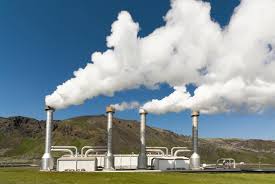
Geothermal energy is the heat of the earth, herself. It manifests in different forms in different places. We all know the most common ways this energy shows itself, in the form of eathquakes, volcanoes, hot springs, and geysers. This is the energy that is tapped into in order to create electricity. More active regions of the world, especially around the edges of tectonic plates, are obvious choices for using geothermal energy. Some sources say that only these regions are capable of tapping into this energy, while other sources say that it can be tapped into anywhere on the planet. So let's discuss.
The basic laws of geothermal energy are that the closer you are to the source of the energy, the more energy you can tap into and acquire. Seems obvious, right? Well, yes and no. For larger scale production, it does help to have access to more energy. That's why most production facilities are located in or near geologically active regions. These facilities generally drill down to a depth of anywhere between 3 and 10 meters for greater access. For smaller scale, single home use, that depth is not necessary. At a depth of only 10 feet, or just over 3 meters, the ground temperature stays around 50-60 degrees F. The best part about geothermal energy is that it is constant and has tremendous efficiency. If you remember from my previous posts, the efficiency of solar and wind are both right around 22%, and hydro runs at 90%. For reference, coal/fossil fuel energy averages around 60%. Geothermal outperforms them all, running an average efficiency rating of 400%. Yes, you read that right - 400%. That means that for every unit of energy that is used, it produces 3-4.5 units of energy. Pretty awesome, huh? It can, however, be costly for the initial build, and there are some environmental concerns associated with using geothermal energy. For a decent list of pros and cons of using geothermal energy, this is a great resource.
There are three main types of systems to harness geothermal energy: dry steam, flash, and binary. A dry steam system pumps steam from fissures directly to a turbine, creating energy. Flash steam is a system where heated water from deep inside the earth is pumped into a container where it is cooled quickly to produce steam to drive a turbine. A binary system uses a secondary fluid that steams at a lower temperature than water. The heated water is pumped into a container that then heats the secondary liquid. That liquid is then turned to steam and sent to the turbine.
Now from what I can tell, this is a bit different from other types of alternative energy. First off, there just isn't a big variety of options. Basically, you either contact a qualified contractor that installs the entire system, which can be incredibly costly, or you purchase a heat pump and supplies, or even a kit, rent a backhoe (or some other way to dig), and lay the system yourself. I do believe that it can be done diy, as many people out there have done it. However, it does seem to go quite a bit easier if you have some basic knowledge of plumbing and possibly HVAC systems. This is a set-up that if not done correctly, it can cause serious headaches down the road.
Geothermal energy definitely has a lot of things that need to be seriously considered. High initial costs (although those are coming down), and not a simple diy project, but the potential is quite astounding. I don't know that this is a resource that I would personally tap into for the simple issue of initial cost. But if you do have a bit more to invest up front and are willing, it can be a great resource.
Monday, July 4, 2016
Homestead Energy: Water
This is an interesting subject for me. I learned an awful lot while doing this research. Water, or hydro power is not as widely talked about as solar or wind power. There must be a consistent flow of moving water to make the turbine/generator work. Whereas we all have access to wind and the sun, we don't all live near a moving water source. Thankfully, with some of the new inventions out there, that's not necessarily a problem any more. We'll get to that in a minute. But first, let's look at water.
The history of using water for power dates back a couple of thousand years, at least. It's primary use was in agriculture, using it as a source to grind grains and such, much in the same manner that wind power started. I'm sure that most of us are familiar with water wheels commonly used in years gone by for powering mills. Much more information on the history is available here. Water is an amazing thing. Soft enough to bath in and drink, and yet powerful enough to carve out canyons through solid granite. 75% of our planet is water. While it might not all be safe to drink, it is fine for creating power. And that's where hydroelectricity comes in. A few centuries ago, water was the primary source of power for many societies. Today, it's primarily used in commercial and industrial industries. There are areas where hydroelectricity is mass produced from dams, providing power for some residents much in the same way coal-fired plants do. It's actually a bit ironic to me that hydroelectricity doesn't get more attention due to the simple fact that as of 2013, more than 50% of the renewable energy used in the U.S., and more than 20% worldwide, was hydropower, according to the U.S. Department of Energy. It also runs at 90% efficiency, which is far greater than solar, wind, and even fossil fuel plants which average around 60% efficiency, according to this. The downside of hydropower is that, for larger scale production, it can be costly to build, is highly susceptible to drought conditions, and can cause major problems environmentaly when dams are used. However, those concerns are nearly non-existent in home use turbines.
Most water turbines fall into one of two categories: impulse or reaction. The type of turbine you choose will be determined by the type of water. Impulse turbines are best suited for high head, low flow water sources. Reaction turbines are just the opposite, being best suited for low head, high flow water sources. The term "head" refers to the height of the water. Under each of these two main classifications, there are a few different examples, each with their own characteristics. This enables a bit more specification to your individual needs. And some of the options even allow for customization in and of themselves. This site explains in much more detail each of these types, how they are built, and how they work. One type of reaction turbine not listed is the Archimedean screw type. While this type has probably been around the longest, having been used as far back as ancient Egypt, it has only become a viable option for home hydropower use within the last 10 years or so. This is a good video showing how the Achimedean screw works.
Now, like everything else, you can go out and buy a turbine and generator. There are several companies out there. The basic home set-up generally starts just under $1,000 and goes up from there. Some only deliver locally, while others will ship worldwide. Some leave it to you to install, others strongly suggest professional installation which will be an additional cost. Some of the different companies that I've come across are here, here, here, and here. I have no experience with these companies. However, they offer a pretty good selection of products for a variety of needs.
All things considered, this, to me, seems to be a relatively easy thing to build, and cost next to nothing. And oh, the ways to build a water turbine are vast. In fact, it's easier to find information on how to build them that it is to find companies from which to buy them. And instructions in building are as varied as the types of turbines, themselves. The obvious plan is to utilize these turbines in a moving body of water, such as a stream or river. I mentioned above that being close to that type of water source is not necessary anymore. The reason for that is simple. Any of these designs, or any that you might be creative enough to come up with, can be adapted to run off of a gray water system. So if you are planning on collecting and reusing water through one of these systems, you can use hydropower. Hydropower is much less expensive to install, and is much more efficient than wind and solar. It would be a shame to not at least consider it for your homestead energy needs. I'll leave you with a collection of links with instructions on building your very own water turbine.
http://www.instructables.com/id/How-to-make-a-water-powered-generator-from-an-old-/
http://www.otherpower.com/otherpower_experiments_waterwheel.html
http://beforeitsnews.com/self-sufficiency/2014/12/homemade-water-wheel-electric-generator-2484748.html
http://www.builditsolar.com/Projects/Hydro/UnderShot/WaterWheel.htm
http://www.power-eng.com/articles/print/volume-114/issue-3/Features/fish-friendly-hydro-turbine.html
http://www.greenoptimistic.com/hydroelectric-generator/#.V3na1_krLIU
http://www.instructables.com/id/Home-made-Hydro-Power-System/
http://www.motherearthnews.com/renewable-energy/hydroelectric-power-systems.aspx
https://www.youtube.com/watch?v=BzN3LDyl_AM
http://www.builditsolar.com/Projects/Hydro/hydro.htm
http://offgridquest.com/energy/hydro-power/former-high-schoolers-amazing-hydro-elec
http://offgridquest.com/energy/how-to-build-a-5-gallon-bucket-hydroelec
Monday, June 27, 2016
Homestead Energy: Wind
My very first memory of learning about wind power was from when I was a child. We lived in Oklahoma City, and every time we went to visit my grandparents, we passed this house that had, what I thought was, a very strange looking little windmill on the top of a pole in their back yard. I asked my dad what it was. That's when I found out about wind turbines. At that time, home use wind power wasn't a very popular thing, at least not that I was aware. Turbines were considered loud, a nuisance and an eyesore. In fact, that home that I had seen so many times was constantly receiving complaints from neighbors, claiming that the turbine was negatively affecting their home values. But the turbine owner didn't flinch. They even upgraded at one point. They knew what they were doing. Just like solar, standard wind turbines haven't changed much over the years, from the famous windmills of Holland to the simple windmills of China going back as far as 200 BC. There are, however, new improvements being made, and more and more options are coming to light.
Wind energy is the second most common form of alternative energy. In many ways, it is comparable with solar. There are, of course, many places where you can buy a new turbine. The cost of purchasing a brand new turbine can cost anywhere from just under $500.00 to well over several thousand, and go into the millions for commercial utlilty use. How much you spend will depend on what exactly you want and need. Windindustry.org states that a large home needs a 10 killowatt turbine, costing somewhere in the neighborhood of $50,000 - $80,000 installed. Keep in mind that that is the average usage based on a traditionally built large home with all the standard electronics and such that are common in a modern home. So that price will vary greatly depending on the size of the home, how it was built, and the actual amount of energy used. So, theoretically, it could cost significantly less than that. Now the positive side of buying new is the simple fact that it is, after all, new. Wind turbines have been known over the years to break down over time, the average lifespan being 20-25 years. This is a common sense issue, really. Turbines have parts that are almost constantly in motion. It only makes sense that they would need repair and replacement over time, as would any other appliance that contains moving parts. If you keep up with maintenance, those repairs shouldn't be too much in the way of cost. It's only if you don't keep up that you really need to worry too much. Just keep in mind that because of that, the entire unit will need to be replaced at some point in the future. As for the efficiency, there is a lot of debate there. The general consensus is that the maximum efficiency of a turbine is about 59.4%, although no turbine has been reported to actually perform that well as of yet. The wind industry says that they tend to run at around 30% efficiency. There is a new study out, however, that disputes that, stating that they only run at 22% efficiency. Even at the lower rate, that still makes them comparable with solar when it comes to efficiency.
Now before we move on to some alternatives to brand spanking new turbines, let's first discuss the difference between horizontal and vertical axis turbines. The turbines that you normally see are horizontal axis, meaning that the rotating axis is parallel to the ground. Vertical axis is just the opposite, where the axis is perpendicluar to the ground. The main difference seems to be in the types of winds they can handle. The common thinking is that horizontal axis turbines perfom better in low to average wind speeds, whereas vertical axis turbines perform better in higher wind speeds. There is, of course, debate there, as well. There are some advocates for vertical turbines who claim they can pick up even the smallest of breezes that traditional horizontal axis turbines won't budge for. There are also some who would say that the vertical axis turbines last longer as they aren't as heavy as horizontal axis, and there isn't as much friction on the moving parts as they turn. As there is much confusion and difference of opinions here, my personal suggestion would be to do as much research as you can on your specific needs, as well as the general conditions where you live to make the best choice. These sites may help. If there is no clear winner, then aquire one of each if you can. That way, you pretty much cover all your bases. One of each? Sure, why not? Don't get too worried just yet. I know. The whole purpose of this entire series, aside from being written for those who don't know too much about the process, is to go off grid as cheaply as possible. So let's go over some options that aren't quite as costly as what I mentioned above.
First we have these guys. This Dutch company has designed a new type of horizontal axis turbine that resembles a nautilus shell. The makers assert that this new design is lighter in weight, increases efficiency, and does so at a lower cost. Generating 1,500 kWh of energy per year from as little as 5 m/s winds, this turbine will cost $5,400. I say "will cost" simply because they do not currently have a location available for sales in the U.S. They plan to have those operations in place by the end of 2016, and currently do have locations across Europe. You can pre-order here, if interested.
Our next contestant comes from Iceland. Being that Iceland already runs 100% off renewable energy, I tend to think they might know what they're doing over there. This is a vertical axis turbine that is built to withstand the very high winds that are common to Iceland, but can also run easily in gentler breezes. These turbines are specifically designed for home use, and claim an amazing list of attributes, from low noise to being bird friendly, and so much more. As of this writing, their website states that these turbines are currently only available in Iceland, but should be available internationally by 2017. No cost is listed.
There is always the option to buy used turbines. Now considering what I mentioned earlier regarding the breakdown over time, I don't know that this is an option that particularly appeals to me. However, it is an option. Most companies that sell used turbines will rebuild, fix, and do whatever else is necessary in order to sell them in relatively new condition. Costs vary significantly based on original year of production, how much it was used, types of repairs needed, model type, and so on. Here a just a couple of sites for purchasing used turbines. Here and here.
Just a short little bit of inspiration here, there are some designs that aren't on the market, but are more or less independent designs. Want a turbine that looks absolutely nothing like a turbine? Check this out. Do you think that maybe you're too old to create something? This 89 year old created a bird-friendly turbine. For a much larger scale turbine, how about a tower that contains a series of smaller turbines at it's base, drawing the wind in to create energy 24/7? Want something even bigger? Maybe a building that acts as it's own turbine is something to get you motivated. Ok, so most of us aren't going to be building towers or building-sized turbines. But inspiration is inspiration, right? My personal inspiration comes from the kenetic art of Anthony Howe. If I could find a way to create significant energy from something like this, then I would be one very happy camper.
Now, the least expensive way to obtain a wind turbine is simply to build your own. With a little ingenuity and a lot of patience, there are tons of places out there with instructions on how to build a turbine, horizontal and/or vertical axis, yourself. The price range here seems to run from as low as $30 up to about $200 per turbine. Rather than go into too much of any one of these options, I'm going to leave you with a short list of sites with instructions to get you started.
http://freernrg.com/home-made-wind-turbine/
http://homestead-and-survival.com/build-wind-generator-truck-alternator/
http://offgridquest.com/energy/wind-power/diy-windmill-project
http://www.instructables.com/id/DIY-1000-watt-wind-turbine/
http://www.treehugger.com/wind-technology/build-diy-wind-turbine-30.html
http://theselfsufficientliving.com/free-diy-or-homemade-wind-turbine-plans-and-designs/
http://www.shtfpreparedness.com/diy-vertical-axis-wind-turbine/
As always, the most important thing is to do some research, find out if wind energy is something that you would consider, and if it is, which type of turbine suits your needs the best. Good luck in your search.
Monday, June 20, 2016
Homestead Energy: Solar
After deciding whether or not you're going to need temporary housing, and if so, which kind best suits your needs, most people would probably say that the next item on your list to research would be the type of home you intend to build. I'm going to go in a slightly different direction, and tell you that the next thing to research should be energy. Admittedly, I am no expert. But the reason I say that is simply because what type of energy source you plan to use may very well help you to decide the type of home you intend to build. Now I am going to go on an assumption here. And if this assumption doesn't fit your situation, that's perfectly fine. But here is my assumption: if you are planning to build an off-grid homestead, you are more than likely looking at alternative, renewable energy sources, and possibly even more eco-friendly building methods for the home, itself.
The types of homes, we'll get to later on. For now, I'll focus on alternative energy. So let's start with probably the most well known, common and most used source of alternative energy: solar. Believe it or not, there are a lot more options out there in solar besides the standard photovoltaic cells (pvc's). While those are still the standard, new and better options are hitting the market regularly. And many more are in testing and development phases. So let's talk about pvc's and a few of those options. This may be a long post, so bear with me.
Photovotaic cells are what we are most familiar with. They've been around for quite a while now. Although the history of solar energy goes all the way back to ancient Greece and Rome, the photovoltaic effect was first officially observed in 1839. By 1900, the term "solar cell" had been patented, and solar powered generators were being built. They went through several incarnations, from using gold and later, silicon to conduct electricity. However, solar cells as we know them today, came about in around 1950, when Bell Labs produced a lightweight solar cell for use in space. Then, in 1954, the first practical home use solar cell was created, also by Bell Labs. While new technology over the years has improved them slightly, they really haven't changed all that much. They average about 200 watts of energy. Meaning, for 25 cells, you would average about 5 kWh. They are roughly 22% efficient in transferring energy into electricity. There are a number of companies that are working to increase that efficiency. Now, if you don't generally use a lot of electricity, rise and sleep by the sun, and such, you might do well with a set-up such as that. However, keep in mind that the average household uses around 911 kWh per month. That amount can be reduced with energy saving appliances, utilizing passive solar to maximize sunlight and heat without electricity, solar water heaters, and other techniques that can be applied based on the various building styles we'll discuss later. The price of a standard system generally averages between $25,000 and $35,000 for the 25 panel system mentioned earlier. There are a number of government incentives for installing panels, and many utility companies may even offset some of the price. The incentives may come from federal all the way down to local government agencies, and can range in the percentage of refund they'll provide. Some are as low as 30%, with others covering up to 50%. If you stay connected to the grid, some ulility companies will buy back any extra energy your panels create, but you don't use. Not all of them will, however, so make sure you look into that before making any investments.
For a less expensive way to install solar panels, you may look into building your own. You can purchase the individual connections, broken pieces of old panels (assuming you know how to put them together), and any other supplies readily on the internet. Most companies will not recommend that you do it yourself. Whether it's because they want your money, or if it's because you're working with electricity, or for whatever reason, I honestly don't know. Probably a good combination of the above. But please do your due dilligence before undertaking this kind of project. A simple google search will yield pages of links to suppliers and instructions such as this, to help you in building your own panels. And youtube is full of diy tutorials. This site is fairly easy to follow for someone who has never done this before, and offers good information. How many panels you will need will depend on your power usage. Whether you buy or build, when using solar panels, you must also remember to take into account where they will be located. If you want to place them on your roof, make sure that the extra weight is added into the calculations for when building your roof. Obviously, there are some regular standards for roofing, but also snow loads where applicable, if it's intended to be a green roof where plants, soil, and extra precautions are needed... these are all things that must be researched, and most likely approved through building code enforcement. So if you are determined to have solar panels on the roof, this is the time to start planning for the extra support the roof will need. Of course, you can always place them on the ground. To me, this actually makes a little more sense. Not just because of the weight, but it will also make it easier to keep clean and repair as needed.
One of the main objections I've heard to traditional solar panels is appearance. "They're such an eyesore!" is what I commonly hear. If that is the only, or even the main objection, there are ways around that. That's where those options I mentioned earlier come into play. For starters, there are solar roofing shingles. They've been around for a few years now, and are starting to come down in price. Designed to look similar to, and integrate with either standard asphalt shingles or curved roofing tiles, an average roof installation runs $20,000 to $30,000 as of 2013. But the cost can vary as pricing is generally by the square foot. As for efficiency, shingles tend to have just shy of 20% efficiency. So the basic break down between standard panels and shingles would be this: in price, they run slightly less. In efficiency, slightly, but barely noticably, less efficient. And solar shingles are less noticable and take less time to install. A decent option, to say the least.
The next option on the list is printable solar cells. Now these are relatively new to the market. Of course, there are companies that create and sell premade flexable cells. Or you can print them yourself on plastic, paper, or cloth. You can also print them using a screenprinting technique using anthrocyanins, a relatively common component of plants. Most resources I've come across to date state that the efficiency can be up to 20%, putting it on equal footing with most standard cells. However, both the efficiency and the price will vary greatly depending on the type of printing used, as well as the exact materials. The downside is that this technology is so new, there are still issues such as potential contamination from water and other environmental factors. Those are being worked on and improved. But it is something to keep in mind if you're interested in the printable option.
If you want an option for using solar that isn't so obvious, there is always spray-on solar. Spray-on solar? Yes, you did read that right. Now, this is one that I do not believe has officially hit the market, yet. But there is some amazing testing and development in the works. This one, I am very interested in seeing because of the type of home I plan to build. While St. Mary's College of Maryland is experimenting with nanocrystals, the Univeristy of Toronto is using something called colloidal quantum dots. Both are still in testing and development phases, but show amazing promise. As of this writing, cost and efficiency have yet to be established.
Next up, we have solar glass. This is where the solar cells are built directly into glass, turing any window into a solar cell. Don't fret, though. This will not effect your view unless you want it to. There are a few companies that sell these windows, like here and here. But in general, it is still in it's testing phases. When first created, there were a few setbacks. It wasn't truly transparent, and it had a tendency to cast a colored shadow. Now, however, through work being done at Michigan State University, there is now the possibility of it being truly transparent, and looking like any other window. Originally costing between $800 and $1,400 per square meter, the cost has dropped to roughly $80 to $100 per square meter. The efficiency of this technology is a bit lacking, running only between 5 and 7%. That is a drawback that is currently being addressed for future products.
Finally, we have this little gem. If you are looking for a product where science meets art, this could be it. I will freely admit that this is probably my favorite choice when it comes to solar. Not only does it look way more attractive than standard solar cells, but the creator of Rawlemon claims that these spheres are many times more efficient than standard cells. The basic idea as I understand it, is a glass or acryllic-polymer sphere filled with water magnifies light - even moonlight - onto a small collection of panels. If it truly does all that it claims, this would be a major step forward in solar technology. The company does have a Facebook page, but they're website states that it is currently down for improvements.
These are just a few of the options that are available when it comes to solar energy. From traditional panels to new artforms, there are a number of choices out there. Keep your eyes open, as more are constantly coming out. In the meantime, enjoy the search.
Monday, June 13, 2016
Temporary Housing Review
When looking to build your own homestead, finding a temporary home is a first step that many of us will need to look at. In the last several posts, I've discussed some of the various options out there for your consideration in looking into temporary housing. I've covered yurts, inflatable concrete, pre-fab, shipping containers, rentals, and some basics for just building it yourself. While I've not gone severely in depth with any of them, I hope that I have given you some ideas, and gotten you started on your journey.
There are so many other options out there for you to consider. Most of them will fall into one of the areas that I've already discussed, but some won't. New concepts and ideas are hitting the market seemingly every day. There is a neverending flow of ideas here. If you already have a basic idea of what you want to do, awesome! If you still aren't sure, there are plenty of informational websites and businesses out there for you to explore. At the end of this post, I'll list just a few new links I've come across, that I haven't yet mentioned. Fair warning: some of them can get a bit pricey.
When deciding to build a homestead, especially from scratch, there are a number of things that must be thought about, researched, and considered, before any digging, building or anything else can even begin to take place. Looking into temporary housing is just one of those things to consider. If you're not going to be needing temporary housing (like if you already live close to where you will build your homestead), then you are ready to move on to the next area of research. Whether or not you will be needing temporary housing while you build, I would highly recommend that you don't make any final decisions until you've researched everything. This is but one piece of a masterpiece puzzle. Even if you think you already know what you want to do, wait. Wait until you've gotten all the information you need to make the entire process as smooth as possible. Yes, there will inevitably be issues, and/or problems that will arise. But being prepared can greatly minimize any stress or undue complications.
I hope that you've enjoyed my mini-series on temporary housing, within the larger series of building a homestead for those who know little to nothing about how to do so. Next week, I'll get into a new mini-series on alternative energy. Some you will know about, some you may have vaguely heard of, and some you may not be familiar with at all. I hope to see you then. Have a great week, everyone! And happy researching!
http://www.offgridquest.com/homes-dwellings/tiny-house/cute-550-sq-ft-prefab-timber-cabin
http://www.offgridquest.com/homes-dwellings/tiny-house/build-a-cabin-in-a-weekend-for-under-500
http://liviingoutdoors.com/0712f01fbafb
http://inhabitat.com/young-filmmaker-transforms-boring-chevy-van-into-a-slick-solar-powered-mobile-home/
http://www.littlethings.com/the-tiny-canal-cottage/?utm_source=sungazing&utm_medium=social&utm_campaign=inspiring
http://www.collective-evolution.com/2015/12/29/affordable-net-zero-pre-fab-home-is-solar-powered-constructed-in-only-3-days/
http://inhabitat.com/passive-newenhouse-is-heated-with-less-energy-needed-for-a-hair-dryer-in-cold-wisconsin/
http://inhabitat.com/this-modern-prefab-home-has-windows-that-double-as-solar-panels/
http://www.shelter-systems.com/shelters.html
http://www.6sqft.com/could-these-portable-temporary-homes-help-solve-nycs-affordable-housing-crisis/
http://www.treehugger.com/modular-design/habode-home-can-be-anywhere.html
Subscribe to:
Posts (Atom)